

HSPA Practice Test
Updated November 2026Facts verified Nov 1, 2026 against Healthcare Sterile Processing Association
The HSPA takes about 3 hours and costs $140[1][2] (Healthcare Sterile Processing Association, verified Oct 25, 2026).
- The HSPA CRCST exam has 150 multiple-choice questions, of which 125 are scored and 25 are unscored pretest questions.[1]
- Candidates have 3 hours to complete the HSPA CRCST exam.[1]
- HSPA set the passing points for the CRCST, CIS, CER and CHL exams using a criterion-reference technique and the Angoff procedure.[1]
- The HSPA certification exam application fee is $140 USD, which covers one exam attempt and includes a $25 non-refundable submission fee.[2]
- A retake of an HSPA certification exam requires a new application and the $140 USD fee.[2]
- HSPA requires a mandatory 6-week waiting period between exam attempts.[2]
- HSPA certification is valid for one year after passing and must be maintained annually.[1]
- HSPA certification exams, including the CRCST, are computer-based and taken at a Prometric testing center, with no paper version.[1]
- CRCST certification requires passing the exam plus 400 hours of hands-on sterile processing experience, completed before testing or during a 6-month provisional period.[1]
Numbers in brackets link to the official sources listed under Sources & last verified. Dates that have passed are removed automatically.
HSPA Exam at a Glance
| Item | Detail | Source · Verified |
|---|---|---|
| Number of questions (CRCST) | 150 questions (125 scored, 25 pretest)[1] | Healthcare Sterile Processing Association · Oct 25, 2026 |
| Time limit | 3 hours[1] | Healthcare Sterile Processing Association · Oct 25, 2026 |
| Passing score | Criterion-referenced cut score (Angoff method); pass/fail[1] | Healthcare Sterile Processing Association · Oct 25, 2026 |
| Exam fee | $140 per exam attempt (includes $25 non-refundable fee)[2] | Healthcare Sterile Processing Association · Oct 25, 2026 |
| Retake fee | $140 per retake[2] | Healthcare Sterile Processing Association · Oct 25, 2026 |
| Retake policy | Mandatory 6-week wait between attempts[2] | Healthcare Sterile Processing Association · Oct 25, 2026 |
| Validity | 1 year, renewed annually[1] | Healthcare Sterile Processing Association · Oct 25, 2026 |
| Delivery | Computer-based at Prometric test centers[1] | Healthcare Sterile Processing Association · Oct 25, 2026 |
| Eligibility (CRCST) | 400 hours hands-on SP experience (before testing, or within 6 months after passing for provisional)[1] | Healthcare Sterile Processing Association · Oct 25, 2026 |
| Score release | Preliminary pass/fail at the test center; portal results within 24 hours[1] | Healthcare Sterile Processing Association · Oct 25, 2026 |
| Registration deadline | No application deadlines (unless an exam is being updated)[1] | Healthcare Sterile Processing Association · Oct 25, 2026 |
| Testing window | Year-round; 120-day eligibility window after approval[1] | Healthcare Sterile Processing Association · Oct 25, 2026 |
What changed for HSPA in 2026
- Oct 25, 2026: Exam fee changed to $140 per exam attempt (includes $25 non-refundable fee) (previously $140 per exam (includes $25 non-refundable application fee)).[2]
- Oct 25, 2026: Retake policy changed to Mandatory 6-week wait between attempts (previously Wait at least 6 weeks between attempts).[2]
- Oct 25, 2026: Score release changed to Preliminary pass/fail at the test center; portal results within 24 hours (previously Preliminary pass/fail at the test center; results in portal within 24 hours).[1]
- Oct 25, 2026: Testing window changed to Year-round; 120-day eligibility window after approval (previously Offered year-round; 120-day eligibility window after approval).[1]
Did you know? The HSPA CRCST exam requires you to complete 400 hours of hands-on experience before or within 6 months of passing the test. This practical component ensures every HSPA sterile processing professional is fully prepared for the demands of the job. Practice with the free Healthcare Sterile Processing Association Certification practice test on PracticeTestGeeks (7 questions with answer explanations).
If you are searching for an HSPA CRCST practice test, an HSPA 150 question practice test, an HSPA free practice test, or a free CER HSPA practice test for endoscope reprocessing, start with the free questions on this page: every answer comes with an explanation, and the study notes below cover the HSPA exam topics in order.
Free Healthcare Sterile Processing Association Certification Study Tools
Interactive Healthcare Sterile Processing Association Certification resources on PracticeTestGeeks, free to start:
- Healthcare Sterile Processing Association Certification flashcards — review key terms and concepts card by card
- Healthcare Sterile Processing Association Certification study guide — topic-by-topic overview of what the exam covers
- Healthcare Sterile Processing Association Certification cheat sheet — one-page printable summary for last-minute review
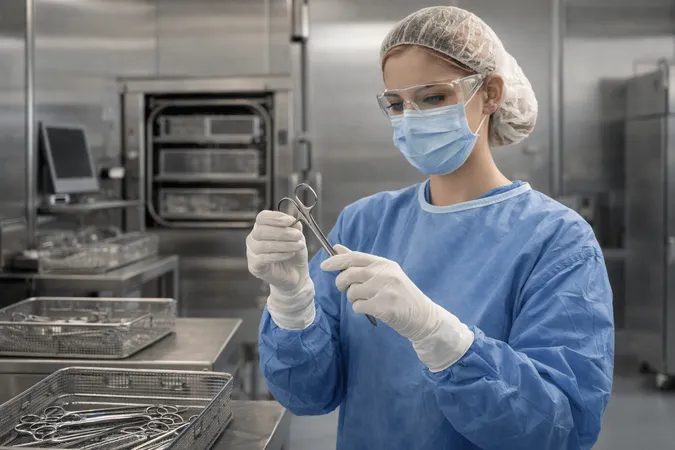
According to Healthcare Sterile Processing Association, “The CRCST exam has a total of 150 multiple choice questions. This includes 125 scored and 25 unscored (pretest) questions.”[1]
HSPA content outline and where to practise each area
The content areas below are copied from the official HSPA content outline published by Healthcare Sterile Processing Association, with the share of the exam each area carries. The right-hand column shows which of our practice sets covers it.
| Official content area | Weight | Practice on this site |
|---|---|---|
| CLEANING, DECONTAMINATION AND DISINFECTION[3] | 21% | Mixed practice tests above |
| DEPARTMENTAL CONSIDERATIONS[3] | 15% | Mixed practice tests above |
| PATIENT CARE EQUIPMENT AND DISTRIBUTION[3] | 5% | Mixed practice tests above |
| PREPARATION AND PACKAGING[3] | 21% | Mixed practice tests above |
| PROFESSIONAL DEVELOPMENT AND HUMAN RELATION SKILLS[3] | 8% | Mixed practice tests above |
| STERILE STORAGE, TRANSPORT AND INVENTORY MANAGEMENT[3] | 9% | Mixed practice tests above |
| STERILIZATION PROCESS[3] | 21% | Mixed practice tests above |
HSPA Practice Test Questions
Prepare for the HSPA - Healthcare Sterile Processing Association Certification exam with our free practice test modules. Each quiz covers key topics to help you pass on your first try.
HSPA Assembly and Packaging Materials
HSPA Exam Questions covering Assembly and Packaging Materials. Master HSPA Test concepts for certification prep.
HSPA Decontamination and Cleaning Verifica...
Free HSPA Practice Test featuring Decontamination and Cleaning Verification. Improve your HSPA Exam score with mock test prep.
HSPA Microbiology for Sterile Processing
HSPA Mock Exam on Microbiology for Sterile Processing. HSPA Study Guide questions to pass on your first try.
HSPA Processing of Patient Care Equipment
HSPA Test Prep for Processing of Patient Care Equipment. Practice HSPA Quiz questions and boost your score.
HSPA Sterile Storage, Inventory Management...
HSPA Questions and Answers on Sterile Storage, Inventory Management, and Distribution Systems. Free HSPA practice for exam readiness.
HSPA Workplace Safety and Risk Management ...
HSPA Mock Test covering Workplace Safety and Risk Management in SPD. Online HSPA Test practice with instant feedback.
HSPA Endoscope Reprocessing
HSPA Test Online for Endoscope Reprocessing. Free practice with instant results and feedback.
HSPA - Healthcare Sterile Processing Assoc...
HSPA Study Material on - Healthcare Sterile Processing Association Decontamination and Cleaning Processes. Prepare effectively with real exam-style questions.
HSPA - Healthcare Sterile Processing Assoc...
Free HSPA Test covering - Healthcare Sterile Processing Association Sterilization Methods and Monitoring. Practice and track your HSPA exam readiness.
HSPA Instrument Identification and Mainten...
HSPA Exam Questions covering Instrument Identification and Maintenance. Master HSPA Test concepts for certification prep.
HSPA Regulations and Standards Compliance
HSPA Mock Exam on Regulations and Standards Compliance. HSPA Study Guide questions to pass on your first try.
HSPA Sterilization and Disinfection
HSPA Questions and Answers on Sterilization and Disinfection. Free HSPA practice for exam readiness.
Worked examples: how to reason through HSPA questions
These are practice questions written for this site, not questions from the real exam. Each explanation shows why the right answer is right and why the others are wrong.
Example 1
Question: What should be used to manually clean the channels of a flexible endoscope?
- A lint-free cloth only
- Channel-specific brushes sized to manufacturer specifications
- Standard pipe cleaners from a hardware store
- Compressed air without any brushing
Answer: B. Channel-specific brushes sized to manufacturer specifications
Explanation:
The correct answer is channel-specific brushes sized to manufacturer specifications. A flexible endoscope has narrow channels of set diameter and length, and the brush has to contact the channel wall to dislodge soil and biofilm. A brush that is too small skips the wall, and one that is too large can scrape or damage the lining.
A lint-free cloth only cannot reach inside the channels. Hardware store pipe cleaners are not made for medical devices, can shed or snag, and are not validated for the scope. Compressed air without brushing may push soil further in or dry it in place, and it does not remove bioburden.
The rule to remember: for any device with lumens, follow the manufacturer's instructions for use and use the cleaning tools that instruction names.
Example 2
Question: What is the primary reason that biofilm on a surgical instrument poses a significant risk to patient safety?
- It causes discoloration and pitting on the instrument's surface.
- It can interfere with the proper articulation of hinged instruments.
- It protects microorganisms from cleaning agents, disinfectants, and sterilants.
- It adds significant weight to instruments, affecting a surgeon's handling.
Answer: C. It protects microorganisms from cleaning agents, disinfectants, and sterilants.
Explanation:
The correct answer is that biofilm protects microorganisms from cleaning agents, disinfectants and sterilants. Biofilm is a community of microorganisms held in a slimy protective layer. That layer shields the cells beneath it, so a process that would normally kill them may fail, and an instrument can look clean and be treated as sterile while still carrying live organisms.
Discoloration and pitting is a surface condition, not the main patient safety risk. Interference with hinged instruments is a function problem, which matters but is not an infection risk. Added weight affecting handling is not a realistic concern. None of these explain why patients could be harmed.
The rule to remember: sterilization and disinfection only work on surfaces that have been cleaned first, so thorough cleaning comes before everything else.
Example 3
Question: Where should an internal chemical indicator be placed within a sterilization pack?
- On top of the instruments where it is easily visible
- In the area most challenging for sterilant to penetrate, typically the geometric center of the pack
- Outside the wrapping material
- Anywhere inside the pack; position does not matter
Answer: B. In the area most challenging for sterilant to penetrate, typically the geometric center of the pack
Explanation:
The correct answer is the area most challenging for sterilant to penetrate, typically the geometric center of the pack. The internal chemical indicator is there to show that sterilizing conditions reached the hardest spot. If the indicator responds there, the easier locations were almost certainly reached as well.
On top of the instruments is easy to see but is the easiest place for sterilant to reach, so it proves little. Outside the wrapping is an external indicator's job, and it only shows that the pack went through a process. Saying position does not matter ignores the whole purpose of the indicator.
The rule to remember: place monitoring where conditions are hardest to achieve, because that is the strongest evidence for the whole load or pack.
How to use these practice tests
Start with the official handbook on the HSPA site. Read the exam outline and note the content areas with the largest weight, since those are cleaning, preparation and packaging, and the sterilization process. Then check the recommended references the handbook lists, because exam questions are built from those standards and manufacturer instructions.
Next, take one practice set from each content area in the table above, without notes. Do not worry about the score at this stage. For every miss, write down the rule behind the right answer in a sentence of your own, and sort misses by area. That list tells you where to spend your time.
Spend the following study sessions on your weakest areas. Read the matching section of the reference material first, then retake the set a day or so later and see whether the same questions still catch you. Mix in the sets for microbiology, endoscope reprocessing and water quality if your work touches them, since they support several content areas.
Close to your test date, do a few mixed sessions to practise switching topics, and rehearse sitting through the 3 hours allowed. If you are still building your hands-on hours, ask your supervisor to walk you through each step you have only read about. Our questions are written by us for practice and are not real exam questions.
HSPA Exam Flashcards
Quick review for the Healthcare Sterile Processing Association exam
🦠What is the primary goal of high-level disinfection?
High-level disinfection kills all vegetative microorganisms, mycobacteria, and viruses but does not necessarily kill all bacterial spores.
START HSPA PRACTICE TEST🌡️What temperature range is typical for steam sterilization?
Steam sterilization typically occurs between 250°F (121°C) and 270°F (132°C), depending on the cycle type (gravity vs prevacuum).
GET HSPA EXAM PREP🔪What is the first step in instrument decontamination?
The first step is point-of-use cleaning to remove gross soil and prevent blood and debris from drying on the instruments.
REVIEW HSPA QUESTIONS📦Why must hinged instruments be sterilized open?
Hinged instruments must remain open to ensure the sterilizing agent contacts all surfaces, including the box lock area.
TRY HSPA MOCK EXAM🔬What is a biological indicator used for?
A biological indicator verifies that sterilization conditions were met by demonstrating the killing of highly resistant bacterial spores.
ACCESS HSPA STUDY GUIDE📋Who regulates disinfectants used on non-critical items?
The Environmental Protection Agency (EPA) regulates disinfectants used on non-critical environmental surfaces.
PRACTICE HSPA TEST NOWHSPA Exam Study Guide
This comprehensive HSPA study guide breaks down essential topics for the certification. Use these HSPA exam insights to focus your preparation on high-yield areas like sterilization methods and regulations.
- Topics: Safety, infection control, medical terminology
- Questions: Approx. 22 questions
- Enroll in Training - Complete a sterile processing course or self-study with the HSPA 9th edition manual.
- Complete 400 Hours - Gain 400 hours of hands-on experience in a sterile processing department (can be done before or after exam).
- Apply for Exam - Create an account on the HSPA website and submit your exam application with the fee.
- Schedule Test - Book your exam appointment at a local Prometric testing center.
- Pass HSPA Exam - Take and pass the 150-question HSPA test (graded pass/fail; HSPA does not publish the cut score).
- Submit Hours - If you took the exam provisionally, submit proof of your 400 hours within 6 months.
- Maintain Certification - Renew annually by completing 12 CE credits and paying the renewal fee.
HSPA Certification for Sterile Processing Technicians
The HSPA certification (formerly IAHCSMM) offers the Certified Registered Central Service Technician (CRCST) credential, which requires passing a 150-question exam covering decontamination, sterilization, and instrument identification. Candidates must also complete 400 hours of hands-on experience in a sterile processing department within six months of passing the written exam.
CRCST Exam Eligibility and Renewal
HSPA certification must be renewed annually with 12 continuing education (CE) credits submitted to HSPA. The exam fee is $140 for all candidates (including a $25 non-refundable application fee), and the test is administered through Prometric testing centers nationwide.
HSPA Sterile Processing Exam Content Areas
The HSPA sterile processing exam tests seven content domains, including cleaning, decontamination and disinfection (20%), preparation and packaging (20%), sterilization process (20%), and sterile storage and inventory management (10%), plus documentation, customer relations, and patient care equipment (10% each). Test-takers should know AAMI ST79 standards, biological indicators, and Bowie-Dick test protocols for prevacuum steam sterilizers.
Instrument Identification Knowledge
Questions cover recognizing Kelly clamps, Metzenbaum scissors, Kerrison rongeurs, and retractors by name and function. Understanding instrument assembly, lubrication with instrument milk, and proper tray weight limits (25 pounds maximum per AAMI) is required.
HSPA Practice Test Preparation Strategy
An effective HSPA practice exam should mirror the 150-question format with a 3-hour time limit; since HSPA reports only pass/fail, treat 75% or better on practice tests as your target. Quality practice questions cover microbiology basics, Spaulding classification (critical, semi-critical, non-critical items), and ethylene oxide aeration times.
Study Resources Beyond Practice Tests
Pair practice tests with the HSPA Sterile Processing Technical Manual (9th edition, 2023), which is the official reference used to write exam questions. Focus review time on weak domains identified through practice test scoring reports rather than re-reading material already mastered. A short HSPA practice quiz of 20-25 questions per domain is enough to expose a weak area without burning a full 3-hour session.
How an HSPA Certification Practice Test Prepares You for the Real CRCST Exam
The CRCST practice test HSPA candidates need most is one that behaves like the real thing. The live exam has 150 multiple-choice questions, but only 125 are scored; the other 25 are unscored pretest items mixed in at random, so treat every question as if it counts. With 3 hours on the clock, that is about 72 seconds per question, the pace to rehearse on any HSPA exam practice test before you sit at Prometric.
Weight your practice the way HSPA weights the exam. Cleaning and decontamination, preparation and packaging, and the sterilization process each carry roughly 20% of scored items, so about 75 of your 125 scored questions come from those three domains. The other four domains share the remaining 40%. If an HSPA practice exam shows you under 75% in any 20% domain, that is where your next study block belongs.
One thing a practice test cannot simulate: once HSPA approves your application you have a 120-day window to schedule at a Prometric center, so use your HSPA free practice test results to decide when to apply.
If you're preparing for multiple certifications in the sterile processing and healthcare technician space, you may also benefit from reviewing the AAC practice test to strengthen your grasp on related clinical terminology and procedures.
Candidates working toward advanced credentials often pair their HSPA study sessions with the AACC practice test to reinforce laboratory and instrument reprocessing concepts that overlap both exams.
The total HSPA certification cost typically ranges from $250 to $500 for self-study candidates, or up to $3,000 if attending a formal college program. Many employers reimburse these fees.
HSPA CRCST Practice Test Strategy by Exam Section
The HSPA CRCST exam is built from the official CRCST Exam Content Outline (revised November 2023 from HSPA's 2023 job task analysis), which splits the test into seven weighted sections. Use those weights to plan every HSPA CRCST practice test session: the three 21% sections together make up 63% of the exam.
- Cleaning, Decontamination and Disinfection (21%) - OSHA bloodborne pathogens, PPE, microbiology, washer-disinfectors, ultrasonic cleaners and cleaning quality tests.
- Preparation and Packaging (21%) - item inspection, package assembly, packaging and labeling methods.
- Sterilization Process (21%) - sterilizer quality tests, methods and cycles, loading, monitoring, post-sterilization handling and process failures.
- Departmental Considerations (15%) - ASHRAE environmental requirements, traffic control, FDA/CMS regulations, ANSI/AAMI and AORN standards, record keeping and quality assurance.
- Sterile Storage, Transport and Inventory Management (9%)
- Professional Development and Human Relation Skills (8%)
- Patient Care Equipment and Distribution (5%)
Because the pass/fail cut score applies to your total result, a weak 21% section costs about four times as many questions as a weak 5% one. A practical routine for HSPA certification prep is one timed 150-question mock exam per week (three hours, as on test day), followed by short quizzes on whichever section scored lowest.
HSPA Certifications Beyond CRCST: CER, CIS and CHL
HSPA (the Healthcare Sterile Processing Association, formerly IAHCSMM) has certified sterile processing technicians since 1971. Besides the core CRCST technician credential covered on this page, HSPA certification includes three more exams, each $140 per attempt at a Prometric test center:
- CER (Certified Endoscope Reprocessor) - a standalone credential, so CRCST is not required. You need at least three months of hands-on endoscope reprocessing experience, earned within the past three years, covering pre-cleaning, testing, decontamination, inspection, disinfection or sterilization, transport and storage of endoscopes.
- CIS (Certified Instrument Specialist) - an advanced surgical instrument credential that requires current CRCST certification.
- CHL (Certified Healthcare Leader) - a management and supervisory credential that also requires current CRCST; from October 2026 HSPA adds experience requirements, such as 12 months (2,080 hours) of Sterile Processing work.
Once you hold CRCST, CIS and CHL can be taken in either order, and every HSPA credential is renewed annually through continuing education. Need a CER HSPA practice test? Free endoscope reprocessing questions are in our endoscope reprocessing practice test, built around the seven CER domains, from microbiology and infection control to human factors that impact endoscope systems. HSPA itself offers no practice exams beyond the quizzes in its study workbooks.
Free CER HSPA Practice Test: How the Endoscope Reprocessor Exam Is Weighted
The CER exam is written from HSPA's CER Exam Content Outline (revised May 2022 after a 2021-2022 job task analysis). Like CRCST, it is a computer-based test of 150 multiple-choice questions with a three-hour limit and a $140 fee per attempt, but its seven domains carry very different weights:
- Endoscope Reprocessing Steps (32%) - point-of-use care, leak testing, manual cleaning, manual high-level disinfection (HLD), automated endoscope reprocessors (AERs), drying, sterilization and recalls.
- Endoscope Handling, Transport and Storage (16%) - storage cabinets, hang time and moving processed scopes.
- Microbiology and Infection Control (12%) and Work Area Design (12%)
- Endoscope Purpose, Design and Structure (10%) and Tracking, Repair and System Maintenance (10%)
- Human Factors That Impact Endoscope Systems (8%)
Reprocessing steps alone are roughly one question in three, so when you take a CER HSPA practice test free on this site, put most of your review time there. HSPA names its Endoscope Reprocessing Manual (2nd ed.), ANSI/AAMI ST91 (2022) and the CDC's Essential Elements of a Reprocessing Program for Flexible Endoscopes (2017) among the references used to build the exam.
What Is HSPA? The Healthcare Sterile Processing Association
HSPA is the Healthcare Sterile Processing Association, the professional association that develops and awards the CRCST and other sterile processing credentials. It was founded in 1958 as the International Association of Healthcare Central Service Materiel Management (IAHCSMM) and is now based at 55 West Wacker Drive in Chicago. HSPA says nearly 60,000 members and certification holders rely on it for education, standards updates and certification.
HSPA certification began in 1971, when the association (then IAHCSMM) started formally certifying sterile processing technicians. Today it offers four exams: CRCST for technicians, CIS for instrument specialists, CER for endoscope reprocessors and CHL for leaders. The HSPA CRCST credential is accredited by both the ANSI National Accreditation Board (ANAB) and the National Commission for Certifying Agencies (NCCA).
Each of these four certification exams has 150 multiple-choice questions (125 scored, 25 unscored pretest items), a three-hour limit and a $140 fee, and is taken on computer at a Prometric test center. HSPA certification is renewed every year with 12 continuing education credits and a $50 fee, which covers all the certifications you hold.
HSPA Test Day Checklist
- ✓Two forms of valid ID
- ✓Prometric confirmation number
- ✓Arrive 30 minutes early
- ✓Leave personal items in car/locker
- ✓Review HSPA sterilization cycles
- ✓Wear comfortable clothing
- ✓Know route to test center
- ✓Relax and be confident!
Start Your HSPA Certification Journey
Join thousands of sterile processing professionals who passed their exam using our free resources. Take your first HSPA practice test now, or jump straight to an HSPA practice quiz on the domain you find hardest, and get certified!
Always submit your renewal application and HSPA CE credits before your certification expiration date to avoid late fees or losing your credential. You can track credits through the HSPA login portal.
- +Validates your knowledge and skills objectively
- +Increases job market competitiveness
- +Provides structured learning goals
- +Networking opportunities with other certified professionals
- −Study materials can be expensive
- −Exam anxiety can affect performance
- −Requires dedicated preparation time
- −Retake fees apply if you don't pass
Pros and Cons at a Glance
| Pros | Cons |
|---|---|
| Validates your knowledge and skills objectively | Study materials can be expensive |
| Increases job market competitiveness | Exam anxiety can affect performance |
| Provides structured learning goals | Requires dedicated preparation time |
| Networking opportunities with other certified professionals | Retake fees apply if you don't pass |
Official Resources
- HSPA: Become Certified - the Healthcare Sterile Processing Association's official CRCST page with the current Certification Handbook, exam content outline, online application, and the 120-day Prometric scheduling window.
- HSPA: Renew Your Certification - official annual renewal rules, the 12 CE credit requirement, deadlines, and the renewal fee for CRCST holders.
- AAMI Standards - the standards body behind ANSI/AAMI ST79 and related sterilization standards that the HSPA exam questions on decontamination, sterilization, and monitoring are written against.
Sample Healthcare Sterile Processing Association Certification Practice Questions
Try these questions from our free Healthcare Sterile Processing Association Certification practice tests. The correct answer and an explanation follow each question.
A sterile processing technician is preparing to run a routine biological indicator (BI) test in a steam sterilizer. According to HSPA standards, what is the recommended frequency for this test?
- A. Once per month
- B. Only when a new type of instrument is introduced
- C. At least weekly, but preferably every day the sterilizer is in use
- D. After every three consecutive successful cycles
Answer: C. At least weekly, but preferably every day the sterilizer is in use
Best practices and standards, such as those from AAMI, recommend that biological indicator monitoring of steam sterilizers be performed at least weekly, and preferably daily, for each sterilizer and for each cycle type used. [23, 28] Additionally, any load containing an implantable device must be monitored with a BI.
What is the purpose of a leak test performed on a flexible endoscope?
- A. To verify the disinfectant concentration is adequate
- B. To confirm the scope channels are not blocked
- C. To detect damage to the outer sheath or internal channels that could allow fluid ingress
- D. To measure the air flow rate through the suction channel
Answer: C. To detect damage to the outer sheath or internal channels that could allow fluid ingress
Leak testing detects perforations or damage in the endoscope's protective sheath and internal components. Fluid ingress through even a tiny breach can damage expensive internal optics and electronics. A failed leak test means the scope must be removed from service and sent for repair.
What is a Tosi test (Wash Check) used to verify?
- A. Sterilizer vacuum function
- B. Effectiveness of the washer-disinfector cleaning cycle
- C. Biological indicator results
- D. Water quality in final rinse
Answer: B. Effectiveness of the washer-disinfector cleaning cycle
Tosi tests use standardized test soils run through the washer to verify cleaning effectiveness.
When should a leak test be performed during endoscope reprocessing?
- A. After high-level disinfection
- B. Before manual cleaning but after bedside pre-cleaning
- C. Only when visible damage is detected
- D. After the endoscope is placed in the AER
Answer: B. Before manual cleaning but after bedside pre-cleaning
Leak testing must be performed after bedside pre-cleaning but before full immersion and manual cleaning. This sequence prevents further damage to a compromised scope during submersion. If the leak test fails, the scope should not be submerged and must be sent for repair.
Take the full Healthcare Sterile Processing Association Certification practice test
HSPA Questions and Answers
Sources & last verified
- Healthcare Sterile Processing Association — time limit, number of questions, passing score, validity (official source). “Candidates have 3 hours to complete the exam.” Verified Oct 25, 2026.
- Healthcare Sterile Processing Association — exam fee, retake fee, retake policy (official source). “The $140 application fee includes the cost to take the exam one time, as well as a $25 non-refundable” Verified Oct 25, 2026.
- Healthcare Sterile Processing Association — other (official source). “cleaning decontamination and disinfection percentage weight 21%” Verified Nov 1, 2026.
How we verify: editorial & fact-checking policy. Report an error: contact us.
How this page was made: written with AI tools and published by Nathan Beja, founder of Practice Test Geeks, who is responsible for its content. Exam facts are checked against the official sources listed below. Not reviewed by a subject-matter expert. Editorial policy
Sources & references
Exam facts on this page (fees, format, dates, passing scores) are checked against these official sources; the date is our last check. Editorial policy
- myhspa.org — Test delivery, eligibility, exam format, passing score, registration deadline, score release, test dates, time limit, score validity, fees · verified Nov 2026