

DLAB Practice Test
Updated November 2026Facts verified Nov 1, 2026 against U.S. Department of War
Passing the practice DLAB test is crucial for service members aiming to attend the Defense Language Institute (DLI). A high score on the DLAB test practice modules can qualify you for Category IV languages like Arabic, Chinese, and Korean, which often come with significant enlistment bonuses and Foreign Language Proficiency Pay (FLPP). Practice with the free DLAB - Defense Language Aptitude Battery practice test on PracticeTestGeeks (11 questions with answer explanations).
Military candidates needing to prove language learning ability should use our DLAB practice test 2026, which simulates the Defense Language Aptitude Battery's invented-language audio and grammar pattern sections.
DLAB: upcoming dates and official changes
- Updated Oct 26, 2026: Number of questions is now Multiple-choice; listening and reading portions (previously Multiple-choice; listening and reading portions).
- Updated Oct 26, 2026: Delivery is now Online, computer-delivered, with headsets (previously Computer-delivered online, with headsets).
- Updated Oct 26, 2026: Passing score is now No single pass mark; scores range 7–164, and the minimum depends on the language's difficulty (previously No single pass mark. Scores run 7–164, and the minimum depends on the language's difficulty.).
Facts verified Nov 1, 2026 against U.S. Department of War. Dates that have passed are removed automatically.
- The Defense Language Aptitude Battery (DLAB) is a multiple-choice test made up of listening and reading portions. (static.e-publishing.af.mil)
- The Navy tells examinees to plan at least 90 minutes to complete the Defense Language Aptitude Battery (DLAB). (U.S. Department of War)
- Air Force test sites allow about 85 minutes to administer the Defense Language Aptitude Battery (DLAB). (static.e-publishing.af.mil)
- The Defense Language Aptitude Battery (DLAB) has no single pass mark: scores range from 7 to 164, and the minimum needed for Defense Language Institute course enrollment depends on the language's difficulty. (U.S. Department of War)
- In the Air Force, examinees must wait at least 6 months after a Defense Language Aptitude Battery (DLAB) attempt before retesting, unless they request an earlier retest through the TCO to AFPC/DPPDA. (static.e-publishing.af.mil)
- Qualifying scores on the Defense Language Aptitude Battery (DLAB) are valid indefinitely. (static.e-publishing.af.mil)
- The Defense Language Aptitude Battery (DLAB) is delivered online by computer, and examinees use headsets. (static.e-publishing.af.mil)
- All enlisted personnel who attend language training at DLIFLC are screened for language aptitude, either with the Defense Language Aptitude Battery (DLAB) or with an approved ASVAB-based tool; officers and civilians take the DLAB at their department's discretion. (esd.whs.mil)
- Navy personnel must take the Defense Language Aptitude Battery (DLAB) to reclassify to the CTI rating, transfer laterally to the Foreign Area Officer community, take a billet that requires foreign language skills, or enroll in a DLIFLC course. (U.S. Department of War)
Facts verified Nov 1, 2026 against U.S. Department of War. Dates that have passed are removed automatically.
DLAB Exam at a Glance
| Item | Detail | Official source |
|---|---|---|
| Number of questions | Multiple-choice; listening and reading portions | static.e-publishing.af.mil |
| Time limit | Plan at least 90 minutes | U.S. Department of War |
| Time limit (Air Force) | About 85 minutes to administer | static.e-publishing.af.mil |
| Passing score | No single pass mark; scores range 7–164, and the minimum depends on the language's difficulty | U.S. Department of War |
| Retake policy (Air Force) | Wait at least 6 months before a retest | static.e-publishing.af.mil |
| Validity | Qualifying scores valid indefinitely | static.e-publishing.af.mil |
| Delivery | Online, computer-delivered, with headsets | static.e-publishing.af.mil |
| Eligibility | Enlisted DLIFLC trainees are screened (DLAB or ASVAB/AFQT); officers and civilians are tested at their department's discretion | esd.whs.mil |
| Eligibility (Navy) | Required for CTI reclassification, FAO transfer, language-skilled billets, or DLIFLC enrollment | U.S. Department of War |
| Score release (Navy) | Score posts to NSIPS within 10 business days | U.S. Department of War |
Facts verified Nov 1, 2026 against U.S. Department of War. Dates that have passed are removed automatically.
Free DLAB - Defense Language Aptitude Battery Study Tools
Interactive DLAB - Defense Language Aptitude Battery resources on PracticeTestGeeks, free to start:
- Free DLAB Grammar MCQ Questions and Answers — 11 questions with instant scoring and answer explanations
- DLAB - Defense Language Aptitude Battery flashcards — review key terms and concepts card by card
- DLAB - Defense Language Aptitude Battery study guide — topic-by-topic overview of what the exam covers
- DLAB - Defense Language Aptitude Battery cheat sheet — one-page printable summary for last-minute review
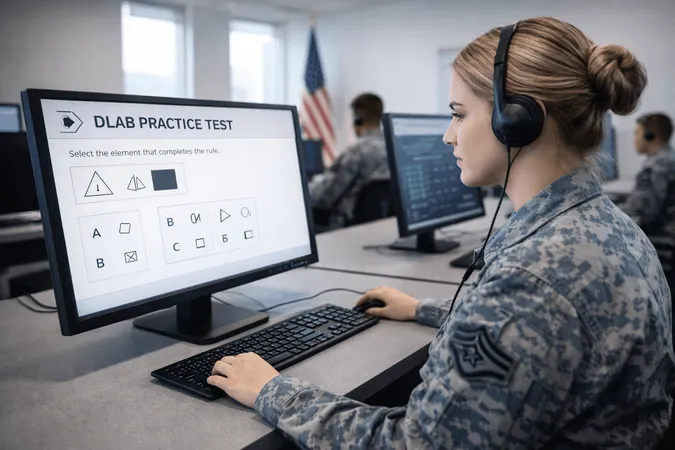
According to U.S. Department of War, “A7.2. Description. The DLAB is a multiple-choice test administered online via the Defense Manpower Data Center Web-Based platform.”[1]
DLAB Practice Test Questions
Prepare for the DLAB - Defense Language Aptitude Battery exam with our free practice test modules. Each quiz covers key topics to help you pass on your first try.
DLAB - Defense Language Aptitude Battery A...
DLAB Mock Test covering - Defense Language Aptitude Battery Applying Fictional Grammar Rules Questions and Answers. Online DLAB Test practice with instant feedback.
DLAB - Defense Language Aptitude Battery A...
Free DLAB Quiz on - Defense Language Aptitude Battery Applying Invented Grammatical Rules Questions and Answers. DLAB Exam prep questions with detailed explanations.
DLAB - Defense Language Aptitude Battery C...
DLAB Practice Questions for - Defense Language Aptitude Battery Comprehensive Rule Application Questions and Answers. Build confidence for your DLAB certification exam.
DLAB - Defense Language Aptitude Battery D...
DLAB Test Online for - Defense Language Aptitude Battery Deducing Rules from Audio Questions and Answers. Free practice with instant results and feedback.
DLAB - Defense Language Aptitude Battery I...
Free DLAB Test covering - Defense Language Aptitude Battery Interpreting Rules from Images Questions and Answers. Practice and track your DLAB exam readiness.
DLAB - Defense Language Aptitude Battery N...
DLAB Exam Questions covering - Defense Language Aptitude Battery Noun and Adjective Agreement Questions and Answers. Master DLAB Test concepts for certification prep.
DLAB - Defense Language Aptitude Battery R...
Free DLAB Practice Test featuring - Defense Language Aptitude Battery Recombining Language Segments Questions and Answers. Improve your DLAB Exam score with mock test prep.
DLAB - Defense Language Aptitude Battery S...
DLAB Mock Exam on - Defense Language Aptitude Battery Syllabic Stress Identification Questions and Answers. DLAB Study Guide questions to pass on your first try.
DLAB - Defense Language Aptitude Battery V...
DLAB Test Prep for - Defense Language Aptitude Battery Visual Language Association Questions and Answers. Practice DLAB Quiz questions and boost your score.
Worked examples: how to reason through DLAB questions
These are practice questions written for this site, not questions from the real exam. Each explanation shows why the right answer is right and why the others are wrong.
Example 1
Question: You hear words in invented language Frelvik: [braNAK], [breNAK], [briNAK]. The translations are: 'I run', 'You run', 'He runs'. The only difference is the first vowel. What vowel codes third person?
- i
- a
- e
- o
Answer: A. i
Explanation:
The correct answer is i. The three words are identical except for the vowel after the opening consonants: [braNAK], [breNAK] and [briNAK]. They map in order to 'I run', 'You run' and 'He runs', so the vowel that marks third person is the one in [briNAK].
The other options fail for a simple reason: 'a' marks 'I run', 'e' marks 'You run', and 'o' appears in none of the words, so nothing supports it.
The general rule: line the forms up, find the single position that changes, and match each change to the change in meaning. Ignore the parts that stay constant. Do not guess from English patterns, because invented languages are built to break them.
Example 2
Question: English uses word order to show meaning: 'the dog bit the man' vs. 'the man bit the dog.' Latin uses case endings: 'canis mordit virum' = 'canine bit man-ACC.' What advantage do case systems provide?
- They make languages harder to learn
- They allow freer word order since grammatical roles are marked on nouns
- They eliminate the need for verbs
- They make pronunciation easier
Answer: B. They allow freer word order since grammatical roles are marked on nouns
Explanation:
The correct answer is that case systems allow freer word order because grammatical roles are marked on the nouns. In the Latin example, the ending on 'virum' marks the man as the object, so the sentence keeps its meaning wherever the words sit.
'They make languages harder to learn' states an opinion the example does not support. 'They eliminate the need for verbs' is wrong because the Latin sentence still has a verb. 'They make pronunciation easier' confuses grammar with sound; endings do not change how easy a word is to say.
The general rule: when a language marks roles with endings, look at the endings to decide who did what, not at the position of the words. English relies on position, which is why the two sentences differ in English.
Example 3
Question: Given these negations: 'ami beka' = 'I go,' 'ami no beka' = 'I don't go,' 'tu beka' = 'you go,' 'tu no beka' = 'you don't go.' What is the negation strategy?
- A suffix on the verb
- A particle 'no' before the verb
- A prefix on the subject
- Changing the verb entirely
Answer: B. A particle 'no' before the verb
Explanation:
The correct answer is a particle 'no' before the verb. Compare 'ami beka' with 'ami no beka', and 'tu beka' with 'tu no beka'. In each pair the only addition is the separate word 'no', placed between the subject and the verb.
A suffix on the verb is wrong because 'beka' is unchanged in the negated forms. A prefix on the subject is wrong because 'ami' and 'tu' stay the same. Changing the verb entirely is wrong because the same verb appears in both versions of each pair.
The general rule: compare the affirmative and negative forms side by side and ask what was added, where it sits, and whether anything else changed. Name the strategy only after checking every pair.
How to use these practice tests
Start with the official material for your branch so you know the delivery format, the listening and reading portions, and how your score will be used. Then take one practice set from each skill area to see where you are slow. The invented grammar rules set and the audio rules set are good places to begin.
Next, spend your sessions on your weakest area. For grammar, work through noun and adjective agreement and contextual word order. For sound, try syllabic stress and sound-symbol correspondence. After every question, write down the rule in a sentence, including the ones you got right by luck.
Because the real test is audio-based, practise with headsets and in one sitting, so you build the stamina to stay focused for the longer time the Navy advises. Avoid memorising our invented words; the real test uses different languages, and what carries over is the habit of comparing forms and finding the pattern. Retakes are restricted, so treat the real attempt as your only one for planning purposes.
DLAB Flashcards
Rapid review for key DLAB concepts
🧠What does the Audio Section measure?
It measures your ability to distinguish stress patterns in words and identify subtle differences in sounds.
START DLAB PRACTICE TEST👁️What is the focus of the Visual Section?
It tests your ability to associate images with words and apply logical rules to new visual information.
GET DLAB EXAM PREP📜Does DLAB test foreign languages?
No, it tests your aptitude to learn languages using a fictional language system and English grammar logic.
REVIEW DLAB QUESTIONS⏲️How long is the DLAB test?
The DLAB test takes approximately 90 minutes to complete, including instructions and practice sections.
TRY DLAB MOCK EXAM📈What is a good DLAB score?
A score of 110 or higher qualifies you for Category IV languages, which are the most difficult to learn.
ACCESS DLAB STUDY GUIDE🎧Can you replay audio portions?
No, audio segments in the DLAB are played only once, requiring intense focus and listening skills.
PRACTICE DLAB TEST NOWDLAB Exam Study Guide
A comprehensive DLAB study guide breaks down the test into manageable sections. Understanding the what is the DLAB test structure is key to success, as the exam focuses on pattern recognition rather than memorization.
Focus on understanding English grammar terms like nouns, verbs, adjectives, and objects. The DLAB test will ask you to manipulate these parts of speech in a fictional language, so knowing exactly what they are is half the battle.
DLAB Score Interpretation
Your DLAB score determines which language categories you are eligible to learn at DLI.
| Score Range | Language Category | Difficulty | Examples |
|---|---|---|---|
| 🟢 95-100 | Category I | Easiest | Spanish, French, Italian, Portuguese |
| 🔵 101-105 | Category II | Moderate | German, Indonesian |
| 🟠 106-109 | Category III | Difficult | Russian, Tagalog, Hebrew, Persian Farsi |
| 🔴 110+ | Category IV | Most Difficult | Arabic, Chinese, Korean, Japanese |
Qualifying for Category IV languages often unlocks higher enlistment bonuses and increased Foreign Language Proficiency Pay (FLPP) due to the difficulty and strategic importance of these languages.
The DLAB is a zero-cost opportunity to qualify for one of the most prestigious and high-paying career fields in the military. Your investment is time and preparation.

DLAB Career Opportunities
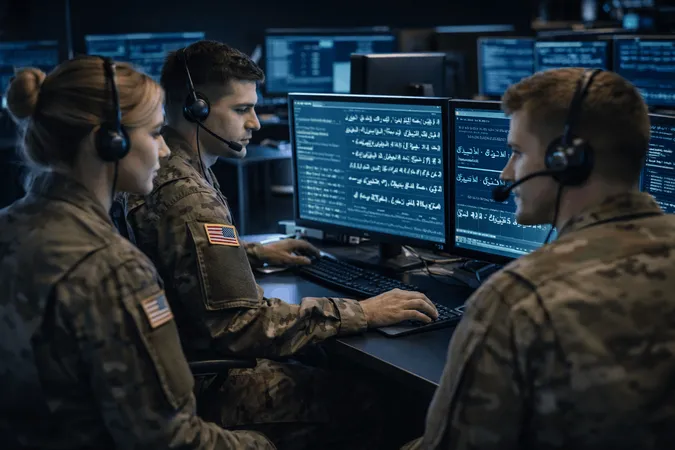
Passing the DLAB opens doors to specialized military careers in intelligence and communications.
Army
Cryptologic LinguistAs a 35P, you will identify foreign communications and provide critical intelligence. Requires top DLAB scores for languages like Arabic and Chinese.
Air
Force LinguistAirborne and ground linguists (1N3/1A8) intercept and analyze foreign transmissions. High demand for Category IV language experts.
Navy CTICryptologic Technician
Interpretive sailors specialize in language analysis and cultural interpretation for naval operations worldwide.
Marine
Corps LinguistMarine linguists provide tactical language support on the ground. A challenging but rewarding role for DLAB passers.
Federal Agencies
Military linguist training (DLI) is highly valued by the NSA, CIA, and FBI, offering excellent post-service career prospects.
DLAB Test Day Checklist
- ✓Government/Military ID
- ✓Scheduling Papers/Orders
- ✓Get a Good Night's Sleep
- ✓Eat a Healthy Meal
- ✓Arrive 30 Mins Early
- ✓Review Grammar Rules
- ✓Bring Reading Glasses (if needed)
- ✓Relax and Focus
Ready to Pass the DLAB?
Start practicing now with our free questions and study guide. Secure your future as a military linguist.
DLAB: Pros and Cons
- +DLAB exam preparation strengthens your knowledge across all domains
- +Passing the exam proves competency to employers and clients
- +Study materials and practice tests are widely available
- +Exam-based credentials are portable across states and employers
- +Clear exam objectives help focus your study plan effectively
- −Exam anxiety can affect performance — practice tests help reduce it
- −Registration fees are non-refundable if you miss your test date
- −Limited retake opportunities may apply with waiting periods
- −Exam content updates periodically — use current study materials
- −Testing center availability may require advance scheduling
Sample DLAB - Defense Language Aptitude Battery Practice Questions
Try these questions from our free DLAB - Defense Language Aptitude Battery practice tests. The correct answer and an explanation follow each question.
A DLAB score of 100 or above typically qualifies a recruit for training in which category of language?
- A. Category I languages (easiest for English speakers, e.g., Spanish, French)
- B. Category IV languages (hardest for English speakers, e.g., Arabic, Mandarin)
- C. Category II languages only
- D. All languages regardless of difficulty
Answer: A. Category I languages (easiest for English speakers, e.g., Spanish, French)
Category I languages require the lowest DLAB threshold; higher scores unlock harder categories.
In 'The more you practice, the faster you learn,' what grammatical structure is demonstrated?
- A. Comparative correlative construction
- B. Superlative degree contrast
- C. Conditional inversion
- D. Parallel infinitive clauses
Answer: A. Comparative correlative construction
The 'the more...the faster' pattern is a comparative correlative structure linking two proportional comparisons.
A test language assigns one unique sound per symbol with no exceptions. A word written with 7 symbols contains exactly how many sounds?
- A. 3 sounds
- B. 5 sounds
- C. 7 sounds
- D. 14 sounds
Answer: C. 7 sounds
Because each symbol maps to exactly one sound with no exceptions, 7 symbols always represent exactly 7 sounds.
A test language uses the symbol 'X' to mark word boundaries. How many words appear in: 'brak X felo X mitu'?
- A. 2 words
- B. 3 words
- C. 4 words
- D. 5 words
Answer: B. 3 words
Two X symbols create two boundaries, dividing the string into three words: brak, felo, and mitu.
Take the full DLAB - Defense Language Aptitude Battery practice test
For a fuller set of questions on this topic, see our dlab practice test resource.
For a fuller set of questions on this topic, see our dlab practice test free online resource.
DLAB Exam Questions and Answers
Written and edited by Nathan Beja, founder of Practice Test Geeks, with AI assistance. Exam facts are checked against the official sources linked below. Editorial policy
Sources & references
Exam facts on this page (fees, format, dates, passing scores) are checked against these official sources; the date is our last check. Editorial policy
- static.e-publishing.af.mil — Test delivery, exam format, retake policy, time limit, score validity · verified Nov 2026
- esd.whs.mil — Eligibility · verified Oct 2026
- netc.navy.mil — Eligibility, passing score, score release, time limit · verified Oct 2026